Working k9
How to Choose a K9 Muzzle: Steel, Leather or Silicone — and the Right Size for Your Dog
Steel, leather or silicone? Compare K9 muzzle types, basket fit and size-by-breed guidance to choose the right muzzle for training, patrol, vet care and transport.
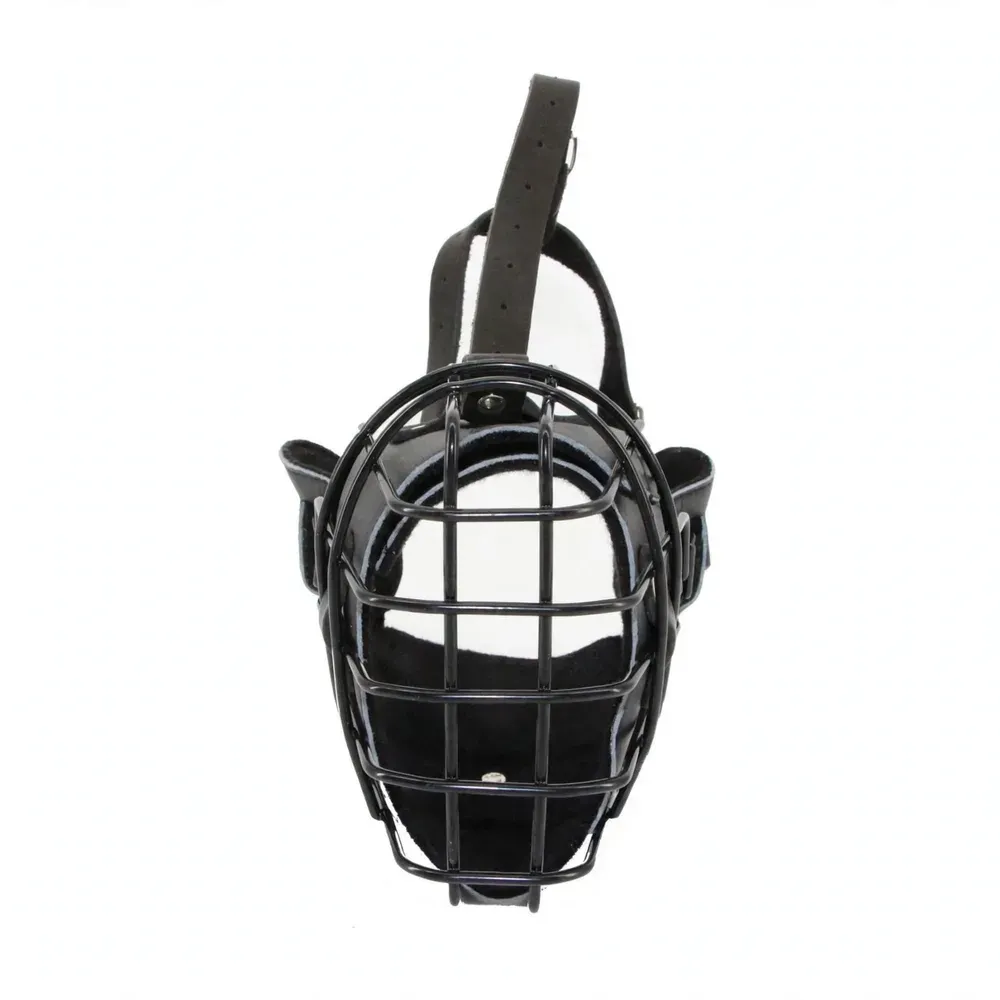
A muzzle is not a punishment, and it is not a substitute for training. For a working dog, it is protective equipment — like a bite suit for the decoy or a harness for the handler. The wrong muzzle can rub, restrict panting, slip at the wrong moment, or fail when the dog lunges. The right one protects the dog, the people around it, and the dog's ability to keep working.
This guide compares the three main muzzle materials Poochin supplies — steel, leather and silicone — explains how a basket muzzle should fit, and gives size-by-breed guidance based on Poochin's published muzzle range. It is written for trainers, handlers, kennels, clubs and distributors who buy for more than one dog.
What a Good Fit Looks Like
Before comparing materials, start with fit. A muzzle that does not fit will not work, whatever it is made from.
A basket muzzle should leave clearance in front of the nose. The dog's nose should not press against the front of the basket, and the basket should be long and wide enough for the dog to open its mouth inside it. Panting is how a dog cools itself, so pant room is not a luxury — it is a safety requirement, especially during training, patrol work and transport in warm weather.
Check the straps as carefully as the basket. The muzzle should stay in place when the dog shakes its head, paws at it, or moves quickly, but it should not pull tight across the cheeks or behind the ears. A rear strap that holds the muzzle without sliding forward is essential. The silicone muzzle in Poochin's range, for example, uses a rear I-shaped double-strap buckle, designed to hold the muzzle securely and resist slipping.
Fit the muzzle to the individual dog, not just to the breed. Two German Shepherds can have different muzzle lengths and head shapes. Use breed guidance as a starting point, then check nose clearance, pant room and strap security on the dog itself before first use in a real scenario.
Steel vs Leather vs Silicone: How the Three Materials Compare
Steel, leather and silicone each suit different work. The table below summarises the practical differences; the sections after it explain when each one makes sense.
Feature | Steel basket | Leather basket | Silicone basket |
Protection | Strong rigid basket, suited to high-contact work | Rigid structure with a leather body; impact models add a fixed inner board to cushion impact | Soft silicone body with reinforced fittings; holds its shape on impact |
Airflow and panting | Open basket allows airflow and panting when correctly sized | Basket design allows airflow; fit and pant room must be checked on the dog | Open design allows the dog to bark normally and pant when correctly fitted |
Feel and wear | Firm, structured basket | Natural leather feel; lining matters for comfort | Soft, flexible feel against the face |
Cleaning | Wipe or wash the basket and straps after use | Keep leather clean and dry; check stitching and straps regularly | Easy to clean after training or veterinary use |
Best for | Patrol, deterrence and high-contact scenarios | Training, patrol and everyday working use where a leather muzzle is preferred | Conditioning, veterinary visits, first aid and transport |
Steel muzzles are the choice when maximum basket strength matters. Poochin's steel range includes a square-mouth steel muzzle and a round-mouth steel muzzle. The tactical muzzle combines a black steel basket with imported cowhide and an eco felt lining, and is designed for real scenarios and deterrence while still allowing the dog to bark normally. Steel is a good option for patrol dogs and for dogs that test a muzzle hard, provided the fit is checked and the straps hold it securely.
Leather muzzles suit handlers who prefer a traditional working-dog muzzle with a natural material against the dog's face. Poochin's leather range includes a square-mouth leather muzzle, an impact leather muzzle and a universal leather muzzle. The impact leather muzzle is made from imported cowhide with a fixed inner board, which cushions impact. Leather needs regular care — check the stitching, straps and lining, and keep it clean and dry — but for many trainers it is the standard choice for daily work.
Silicone muzzles suit conditioning, veterinary care and situations where a softer muzzle is preferable. Poochin's silicone muzzle, model KL-012, is made from soft silicone with reinforced fittings. It holds its shape on impact, allows the dog to bark, and uses a rear I-shaped double-strap buckle with an anti-slip design. It is a practical option for first-aid training, vet visits and transport, and for dogs that are being introduced to a muzzle for the first time.
There is no single best material. A patrol dog and a dog going to the vet have different needs. Many kennels and training schools keep more than one type, and choose by task rather than by habit.
Basket Shape and Strap Security
Basket shape affects both protection and comfort. A square-mouth basket suits dogs with a broader, squarer muzzle profile, while a round-mouth basket suits dogs with a rounder muzzle shape. Poochin offers both square-mouth and round-mouth steel muzzles, and square-mouth and universal leather muzzles, so the basket shape can be matched to the dog rather than forced to fit.
When you try a muzzle on, work through these checks in order:
- Nose clearance — the nose does not touch the front of the basket.
- Pant room — the dog can open its mouth and pant inside the basket.
- Vision and breathing — nothing presses on the eyes or restricts the nostrils.
- Strap security — the muzzle stays in place when the dog shakes its head.
- No rubbing — check the bridge of the nose, cheeks and behind the ears after a short wear.
If any check fails, try a different size or basket shape. Do not try to fix a poor fit by tightening the straps. A muzzle that is too tight restricts panting and causes rubbing; a muzzle that is too loose can be pawed off.
Size by Breed: A Starting Point
Poochin publishes breed guidance for several of its muzzles. Use the table below as a starting point, then fit the individual dog.
Poochin muzzle | Sizes / models | Breed guidance |
15006 (L), 15007 (S) | Choose by the dog's muzzle length and head size; check nose clearance and pant room on the dog | |
15009 | Choose by the dog's muzzle shape; round-mouth basket for rounder muzzle profiles | |
15010 | Choose by the dog's muzzle length and head size; check fit on the dog | |
15013 (L), 15014 (S) | Large fits German Shepherd and Rottweiler; small fits Malinois | |
15015 (L), 15016 (S) | Large fits German Shepherd and Rottweiler; small fits Malinois | |
15042–15047 (6 sizes) | Size 1 Rottweiler, Size 2 Malinois, Size 3 German Shepherd, Size 4 Labrador, Size 5 Dutch Shepherd, Size 6 Springer Spaniel | |
KL-012, sizes L / M / S | Choose by the dog's muzzle length and head size; check nose clearance, pant room and strap security |
Two points deserve emphasis. First, the impact and tactical muzzles share the same breed guidance — large for German Shepherd and Rottweiler, small for Malinois — so the choice between them is about material and use case, not about size. Second, the universal leather muzzle is the most breed-specific option in the range, with six sizes mapped to six breeds, which makes it useful for clubs and kennels that work with several breeds.
If a dog falls between sizes, or if its breed is not listed, measure the muzzle length and circumference and compare them with the product listing, then fit the muzzle on the dog before relying on it. For distributors and training schools ordering for a group, it is better to order a spread of sizes and confirm fit dog by dog than to order one size for every dog.
Choose by Use Case
Training. A muzzle used in training must allow panting and barking, stay secure during movement, and be comfortable enough for the dog to focus on the exercise. Leather and silicone muzzles are common choices here. The silicone muzzle is particularly useful during early conditioning, because its soft body is less intimidating for a dog that is new to muzzles.
Patrol and deterrence. For patrol work and real scenarios, basket strength and strap security matter most. The tactical muzzle — black steel, imported cowhide and eco felt lining — is designed for this role, and the dog can still bark normally while wearing it. The square-mouth and round-mouth steel muzzles are also suited to high-contact work.
Veterinary care and first aid. An injured dog will bite when it is in pain, even a dog that is normally gentle. The Firearm Blog's November 2026 piece, "K9 Handler Gear Considerations," makes exactly this point: a basket muzzle fitted to the specific dog in advance is the first item out for an injured dog. A silicone muzzle is a practical choice for a first-aid kit, because it is soft, holds its shape on impact, allows barking, and is easy to clean after use.
Transport and public places. For transport and public settings, the muzzle must be secure, allow panting, and be comfortable for longer wear. Check the fit before the journey, not during it, and make sure the dog has had a chance to get used to the muzzle beforehand. A dog that has never worn a muzzle should not have its first experience in a crowded or stressful place.
Ordering for a Club, Kennel, or Distributor
Muzzles are often bought for more than one dog, and that changes how the order should be placed. A club or a kennel ordering for a group should send the target muzzle types, the breeds and sizes for each dog, the expected quantity, and any logo or packaging requirements. Poochin supplies wholesale, OEM, and private-label options, so a distributor can order across materials and sizes rather than taking one type for every dog.
Order a spread of sizes and confirm the fit dog by dog: a size that fits on paper can still fail on a dog with an unusual muzzle length or head shape. For a first order, include a sample of each type you plan to stock, fit them on the dogs they are meant for, and check nose clearance, pant room, and strap security before approving the bulk order. For how to prepare an equipment quote request, see: https://www.poochin.com/posts/how-to-prepare-an-oem-k9-equipment-quote-request
If you are equipping a club, a kennel, or a whole training team, contact Poochin (link: https://www.poochin.com/contact-us) with your target muzzle types, breeds, sizes, and quantities, and ask about wholesale, OEM, and private-label options.
Buyer Checklist
- Fit the muzzle to the individual dog, not just the breed.
- Confirm nose clearance and pant room before first use.
- Check strap security — the muzzle stays on when the dog shakes its head.
- Choose the material by task: steel for high-contact work, leather for daily working use, silicone for conditioning, vet care and transport.
- Match the basket shape to the dog's muzzle profile — square-mouth or round-mouth.
- Use the verified size-by-breed table above as a starting point, then fit on the dog.
- For a group order, order a spread of sizes and confirm fit dog by dog.
- Keep a muzzle in the first-aid kit, fitted to the dog in advance.
FAQs
1. What is the best muzzle material for a working dog?
It depends on the task. Steel suits high-contact patrol and deterrence work. Leather suits daily training and working use. Silicone suits conditioning, veterinary visits, first aid and transport. Many kennels keep more than one type and choose by task.
2. How should a basket muzzle fit?
The nose should not touch the front of the basket, the dog should be able to open its mouth and pant inside it, and the straps should hold the muzzle securely without pulling tight across the cheeks or behind the ears. Check for rubbing on the nose bridge, cheeks and behind the ears after a short wear.
3. What size muzzle does a German Shepherd need?
For Poochin's impact leather muzzle and tactical muzzle, large fits German Shepherd and Rottweiler, and small fits Malinois. For the universal leather muzzle, Size 3 is mapped to German Shepherd. Always confirm fit on the individual dog, because muzzle length and head shape vary within a breed.
4. Can a dog bark and pant while wearing a muzzle?
Yes, if the muzzle is correctly fitted. The tactical muzzle and the silicone muzzle are both designed to allow the dog to bark normally, and a correctly sized basket muzzle allows panting. If a dog cannot pant or bark, the muzzle is too small or the wrong shape.
5. Which muzzle should I put in a first-aid kit?
A basket muzzle fitted to the specific dog in advance. The Firearm Blog's November 2026 guidance notes that a fitted basket muzzle is the first item out for an injured dog, because a dog in pain will bite. The silicone muzzle is a practical choice for a kit: it is soft, holds its shape on impact, allows barking, and is easy to clean.