Working k9
Cotton-Polyester Bite Rags: Soft, Safe Training for Young and Old Dogs
A soft cotton-polyester bite rag suits puppies and senior dogs — here is how to choose the material, handle and size.
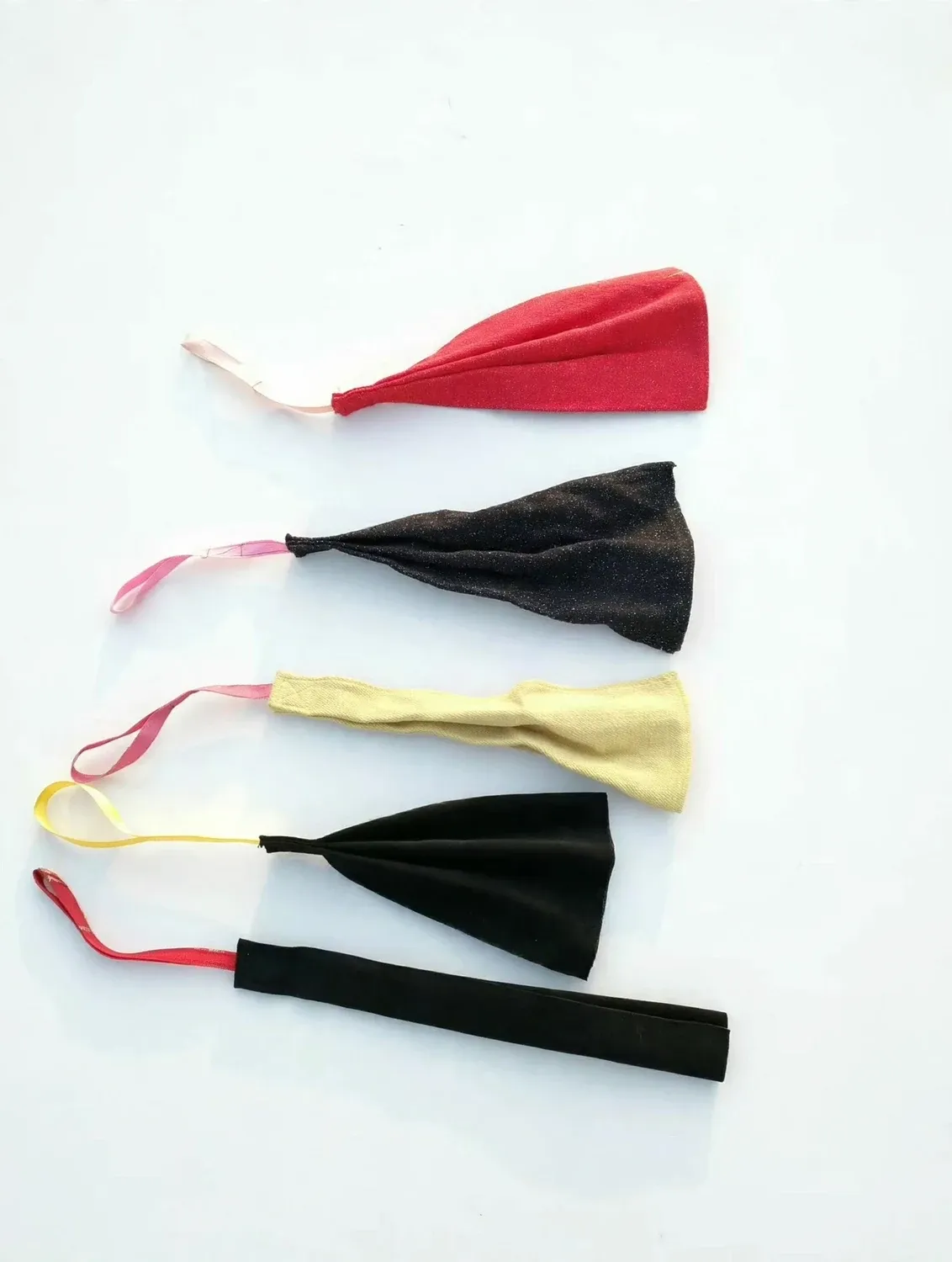
A puppy's teeth are still developing, and a senior dog's teeth are often worn down. Both need a bite target that gives, rather than one that fights back. That is the job of a flat bite rag: a wide, soft strip of fabric with a handle, made to be bitten, held and given up easily. Trainers reach for a rag when the session is about confidence, grip and delivery rather than power. Cotton-polyester is the usual choice: soft on teeth, light in the hand and easy to wash.
What a cotton-polyester bite rag is
A bite rag is a flat strip of woven fabric with a handle at one end. The dog bites the wide end; the handler holds the handle to invite the bite, reward the grip and end the game. Cotton-polyester blends the two fibres: cotton for a soft, natural bite feel, and polyester for strength and shape.
Poochin's current bite rag is cotton and polyester with a nylon handle, in a 60 cm by 35 cm size. Size and material can be customised, so the rag can be made narrower or shorter for a smaller dog.
Why soft and safe matters for young dogs
A puppy's mouth is a work in progress. Milk teeth are sharp and thin, adult teeth are still settling, and the jaw is learning how hard to bite. A soft rag helps: the bite sinks in without a jolt, so the puppy can hold on and tug without pain.
Softness also protects the training itself. Early sessions are short, and the puppy's reward is the rag. A cotton-polyester rag gives a comfortable target that the puppy can win and carry, which builds the confidence that later, firmer work depends on.
Why the same softness helps senior dogs
Senior dogs have a different problem, but the answer is similar. Their teeth may be worn, chipped or missing, their gums may be sensitive, and their jaw muscles are no longer as strong. A dog that loved hard tugs at three may still love the game at nine, but it cannot play it the same way.
A cotton-polyester rag lets that dog keep playing. The soft surface is easy on worn teeth and sensitive gums, and the flat shape spreads the bite across the mouth instead of concentrating it on one point. If the dog has had dental work, ask the vet before starting any bite work, soft or not.
The handle: wide, strong, polypropylene or nylon
The handle changes the session more than most buyers expect. A wide handle spreads the load across the hand, so the handler can hold a strong dog without the strap cutting in.
Buyers often ask for a specific handle material. One common request is a wide, strong handle made of polypropylene, chosen because it is light, firm and holds its shape in the hand. Poochin's current bite rag uses a nylon handle instead. Nylon is strong and flexible, with a little give that suits handlers who like a softer feel. Both do the same job; the choice comes down to how the handler likes the rag to feel. What matters most is the construction: wide enough to grip, stitched so it cannot pull free, and long enough to keep the hand clear.
Cotton-polyester vs cowhide vs jute
The three materials sit on a scale from soft to firm.
Material | Bite feel | Best stage | Watch out for |
|---|---|---|---|
Cotton-polyester | Soft, forgiving, light | Puppies and senior dogs; confidence and grip work | Not a power-building tool; replace when frayed |
Cowhide | Firm, durable, heavier bite | Adult dogs building drive and full grip | Too firm for sore mouths and young teeth |
Jute | Firmest, textured, traditional bite surface | Adult dogs, drive and power building | Can be harsh on puppies and worn teeth |
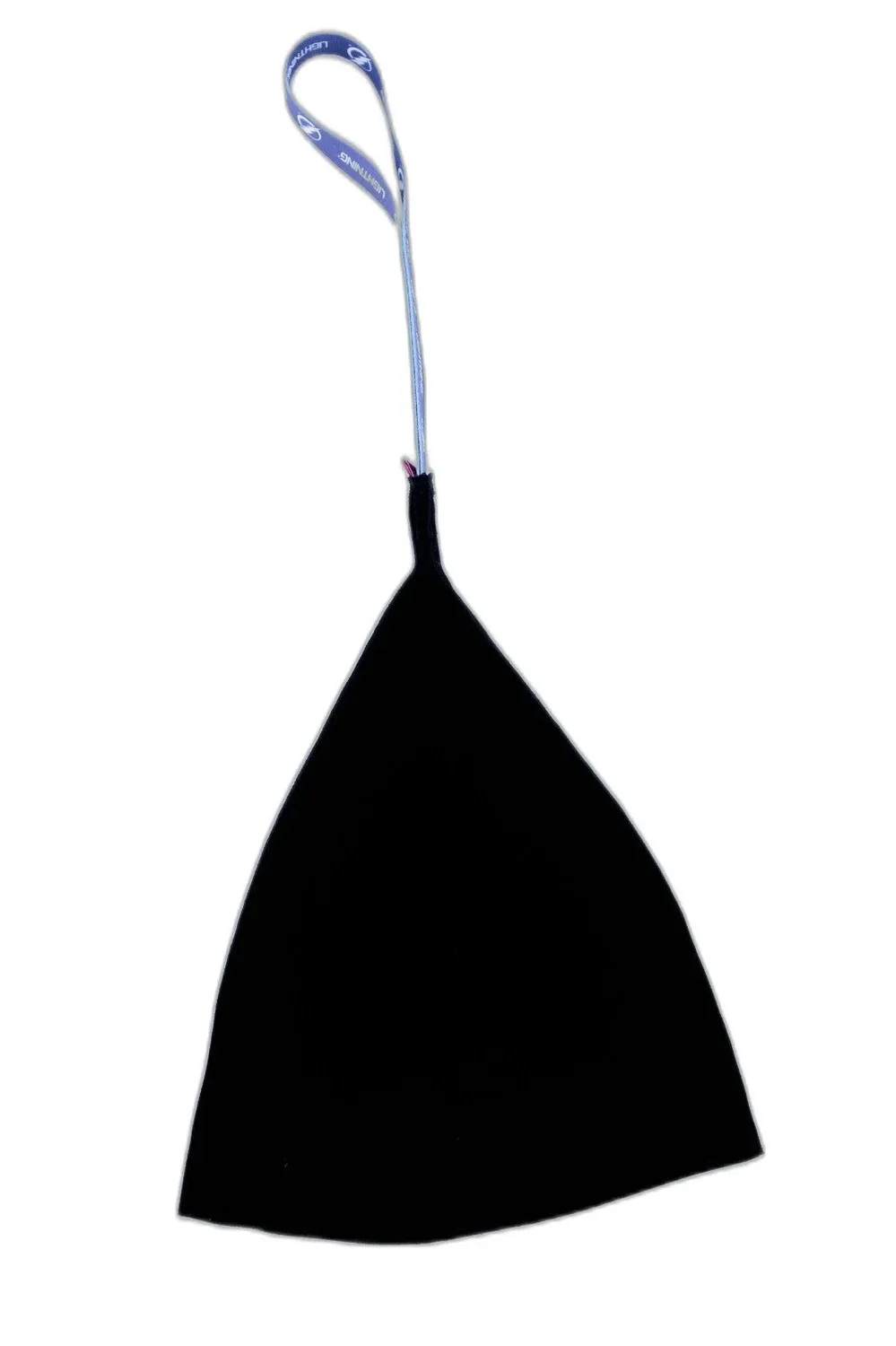
Cowhide is the firmer middle ground. A cowhide bite rag, such as the black triangular rag shown below, gives the dog a solid, durable surface to bite into and lasts well under repeated adult use. It suits an adult dog building drive and a full grip, but not a puppy or a senior dog with a sore mouth.
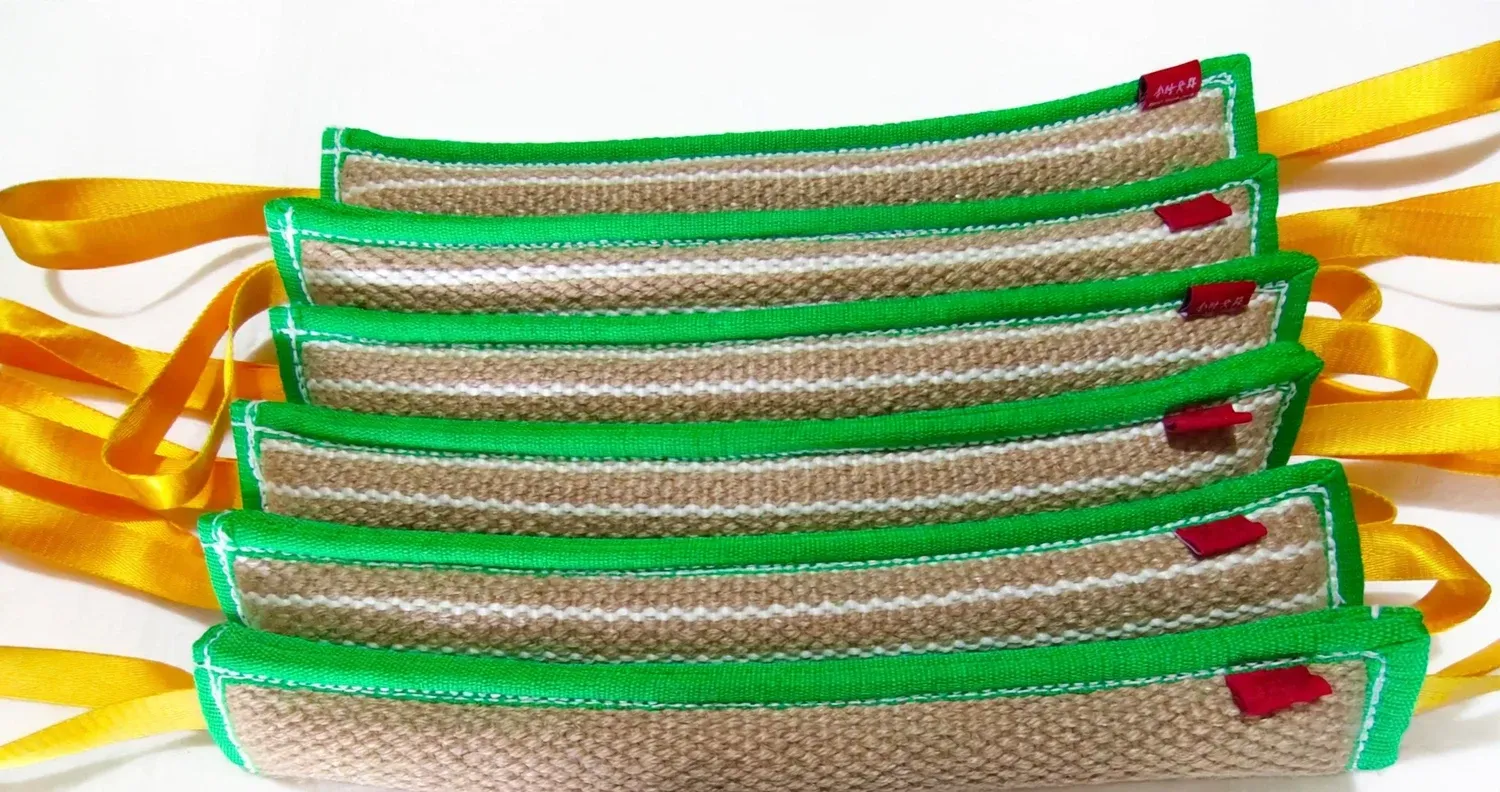
Jute is firmer still. Poochin's jute bite tugs come in a 60 cm by 35 cm double-handle standard, with a single-handle 60 cm by 10 cm version available as a custom order, and French linen bite tugs come in 45 cm and 60 cm. Both are for adult drive and power work.
Start soft and move firm only when the dog's mouth allows it: the rag teaches the bite, and the cowhide and jute test it.
Sizing and use: the 60 by 35 cm reference
The 60 cm by 35 cm size is a good starting point for most handlers and medium to large dogs. Sixty centimetres of length keeps the hand well away from the bite, and thirty-five centimetres of width gives the dog a broad target that is easy to find and hold. For a smaller dog or a puppy, a narrower or shorter rag is easier to carry and less likely to drag on the ground.
Introduce the rag in order. Let the dog see and sniff it first, then present it low and still, so the dog can take it in its own time. When the dog bites, hold steady and let it win the rag for a few seconds before asking for it back. Trade, do not pull: offer food or another toy, and take the rag when the dog releases it.
Care and replacement signs
Shake off loose dirt after each session and let the rag dry fully before putting it away, because a damp rag left folded will smell and weaken faster. Wash it in cold or lukewarm water with a mild detergent, and let it air dry rather than using high heat, which can shrink the cotton and stiffen the weave.
Replace the rag when the signs appear: fraying along the bite edge, thinning in the middle where the dog grips, or a handle that has stretched and gone soft.
Buyer's checklist: what to tell your supplier
- Dog age and stage: puppy, adult or senior, and what the rag is for.
- Material: cotton-polyester for soft work, or cowhide for a firmer bite.
- Handle type: single loop or double handle; polypropylene or nylon.
- Size: length and width, using 60 cm by 35 cm as the reference.
- Quantity: how many rags, and whether different sizes are needed.
- Reference photo, if you have one.
- Intended use: training, rewards, club sessions or resale.
FAQs
Is a cotton-polyester bite rag safe for puppies? Yes, for supervised training. It is soft on developing teeth and light to carry. Keep sessions short and trade for the rag rather than pulling it away.
Can senior dogs use it every day? Yes, in short sessions. It is easy on worn teeth and sensitive gums. Stop while the dog still wants more, and check with a vet first after dental work.
Polypropylene or nylon handle — which is better? Both are strong. Polypropylene is light, firm and holds its shape; nylon has more give and a softer feel. Choose by how you like to hold the rag.
When should we switch to cowhide or jute? When the dog is an adult with a settled, full grip and needs to build drive. Cowhide first, then jute. Do not rush the move.
How do I clean a cotton-polyester bite rag? Shake off dirt, wash in cold or lukewarm water with mild detergent, and air dry. Replace the rag when it frays or loses its shape.
For more on choosing tugs by training stage, see How to Choose K9 Training Bite Tugs and K9 Bite Training Gear by Age. For a wider comparison of bite materials, see K9 Bite Gear Materials Compared. The tug range itself is at Professional K9 Bite Tugs.
Request a quote
If you need cotton-polyester bite rags for a club, a school or a brand range, tell us the dog stages, the handle type and the sizes you need. Custom size, material and handle options are available. Contact us at sales@poochin.com and we will confirm the options with you.