Working k9
Bite Tug Size and Handle Guide: 45 cm vs 60 cm, Single vs Double Handle
Choose the right bite tug length, width and handle count: 45 cm vs 60 cm, single vs double handle, and what to tell your supplier.
Most buyers start by asking about material. Jute or French linen, cotton-polyester or cowhide: that question matters, but size and handle count decide whether a tug works in daily training. A tug that is too long gets in the way in close work, and a rag that is too wide is hard for a smaller dog to hold.
This guide is about flat bite tugs and bite rags, the kind that hang from a loop handle and lie flat in the dog's mouth. It covers three decisions: how long, how wide, and how many handles. If you are choosing cylindrical tugs by training stage instead, start with How to Choose K9 Training Bite Tugs (https://www.poochin.com/posts/how-to-choose-k9-bite-tugs).
Length: 45 cm vs 60 cm
Length is about reach and control. A 45 cm tug keeps the dog close to the handler. That suits heeling work, close reward delivery and smaller training spaces, where a long tug would swing, drag on the ground or hit the handler's leg.
A 60 cm tug gives the handler more distance from the dog's mouth. That matters in drive work with a strong adult dog, where the handler needs room to move and to keep hands clear of teeth, and when the tug is used as a moving target. French linen bite tugs are made in both 45 cm and 60 cm for this reason.
Do not buy the longer tug by default. Length that is not needed gets in the way. Choose 45 cm for close, controlled work indoors or in a small yard. Choose 60 cm for an adult dog in full drive work, or when the handler needs distance.
Width: 10 cm narrow strip vs 35 cm wide rag
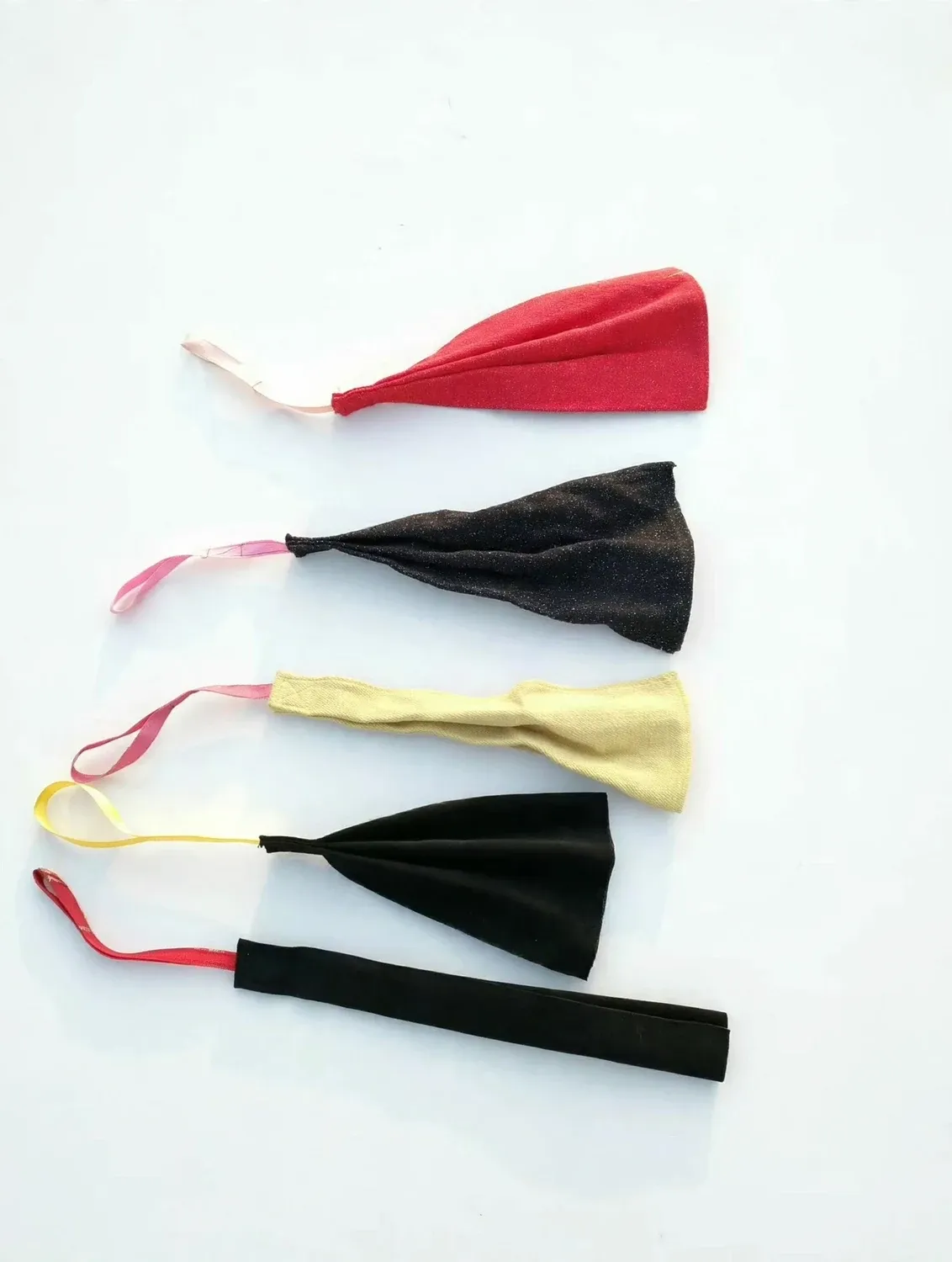
Width decides what the dog actually bites. A 10 cm narrow strip, 60 cm long, is a precise target. The dog takes it in the front of the mouth, the handler can see exactly where the bite lands, and the tug is easy to carry, fold and store.
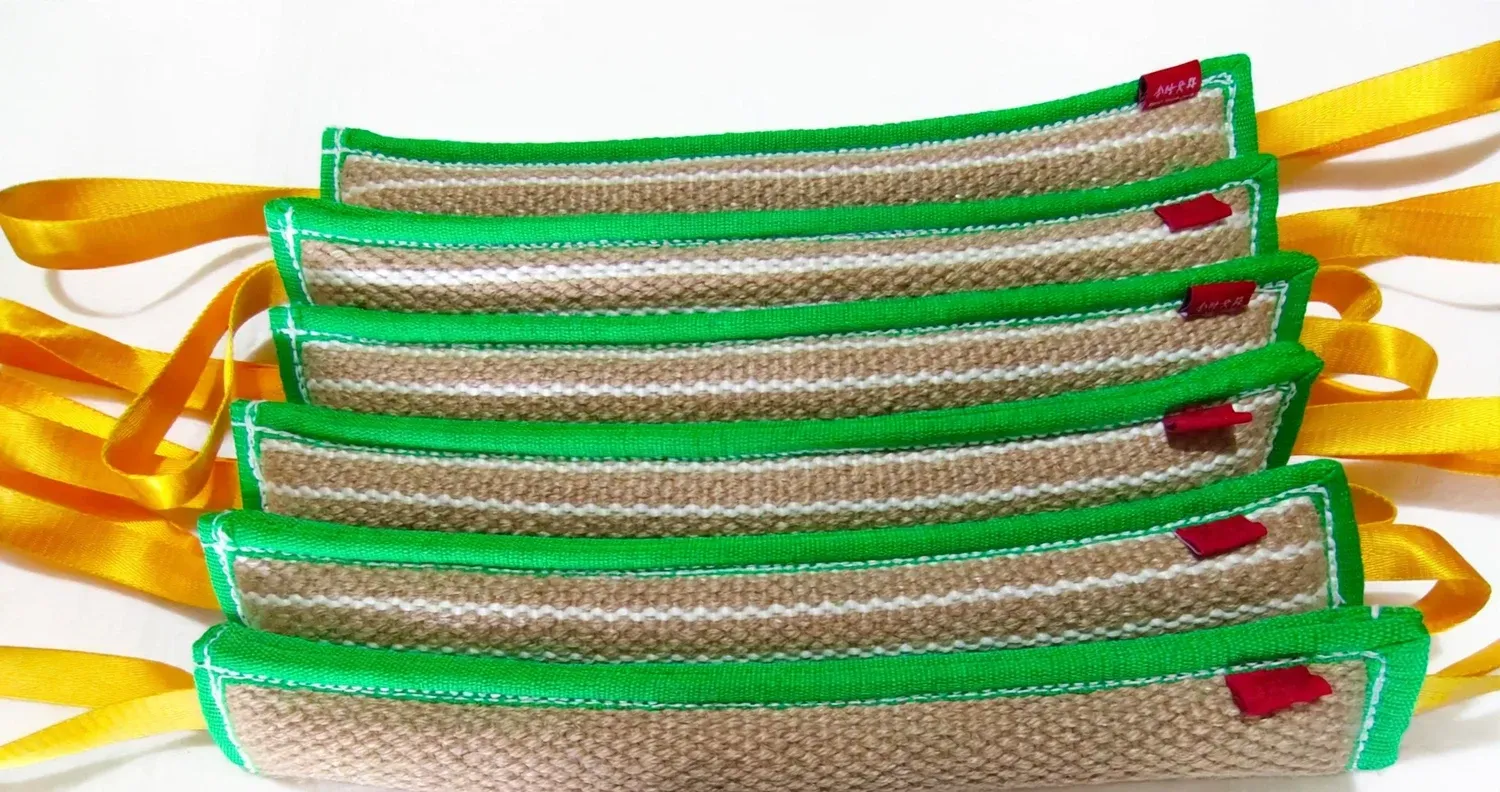
A 35 cm wide rag, 60 cm long, is a different tool. It gives the dog a large, forgiving bite area, which helps a dog that is still learning to target. It also hangs differently: a wide rag folds, flaps and moves in the air, which can raise arousal. Our standard jute bite tug and our standard bite rag are both 60 cm long by 35 cm wide for this reason.
Width also affects how the dog carries the tug. A narrow strip is easy to hold and carry back, while a wide rag is bulkier in the mouth and is usually dropped. A small dog will struggle with a 35 cm wide rag, while a large dog may find a 10 cm strip too small and regrip constantly.
Single handle vs double handles
Handle count is about how the tug is delivered and controlled. A single handle is the simplest option: one loop, one hand, one clear way to present the tug. It suits a handler who works alone and needs a free hand for a lead or a second tug. The black cowhide bite rag shown in this guide has a single loop handle: one handle, one tug, no extra straps to manage.
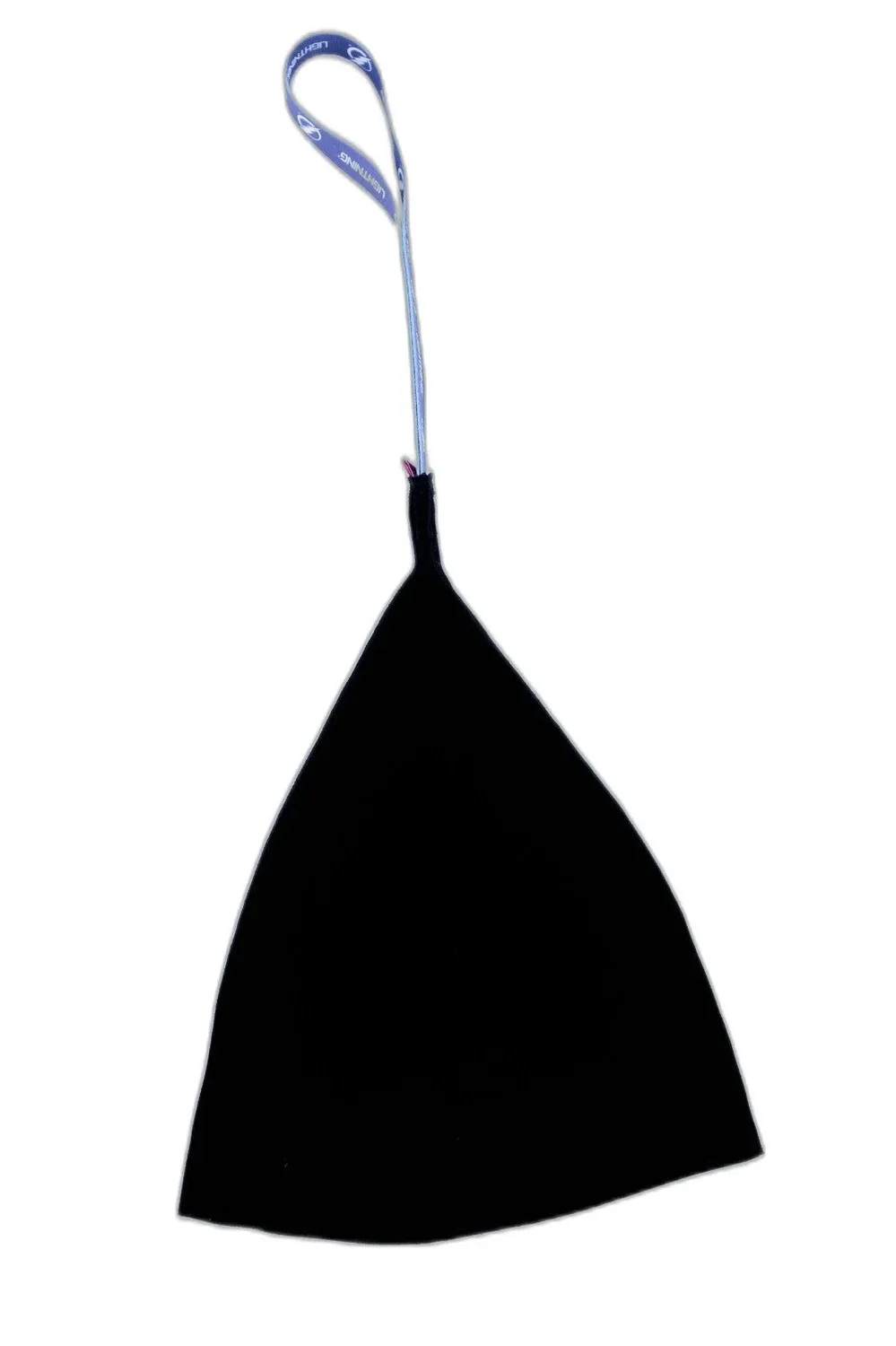
Double handles give the handler two points of control. With a handle at each end, the handler can hold the tug taut, pull from both sides, and keep it steady while the dog bites. That helps in tug-of-war play and in building grip strength. The trade-off is complexity: two loops to keep clear of the dog's feet and teeth. For beginners, a single handle is usually the safer start. For experienced handlers doing drive work and grip building, double handles give more control.
Handle material and width
A handle has to be wide and strong enough to hold under a full bite and a hard pull. A narrow, thin handle cuts into the hand and is hard to grip with gloves or wet hands. A wide handle spreads the load and is easier to grab quickly.
The material of the handle matters as much as its width. Polypropylene handles are wide, strong and light, and they hold their shape in use. That is the handle material one buyer specified for a cotton-polyester bite rag. Nylon handles are the other common option, and they are what our current bite rag uses. Nylon is strong, flexible and comfortable in the hand.
When you compare handles, check width, stitching, and whether the handle lies flat when not in use. Is it stitched through the body of the tug, not just tacked to the edge? For more on cover materials, see French Linen vs Jute (https://www.poochin.com/posts/french-linen-vs-jute-bite-material) and Jute, Bite-resistant Fabric, or Canvas Compared (https://www.poochin.com/posts/k9-bite-gear-materials-compared).
Putting it together: size and handle compared
No single configuration fits every dog and every session. The table below puts the four configurations buyers ask about most side by side.
Configuration | Best for | Watch out for |
|---|---|---|
45 cm tug | Close work, heeling, small spaces, controlled reward delivery | Too short for drive work with a strong adult dog |
60 cm tug | Adult drive work, chase and catch, handler distance | Can swing and drag in close or indoor work |
60 cm x 10 cm, single handle | Precise bite target, easy carrying, one-hand delivery | Small bite area; dog may regrip |
60 cm x 35 cm, double handles | Large bite target, tug-of-war, two-hand control | Bulky in a small dog's mouth; two loops to manage |
Read the table from the training session backwards: start with the dog and the exercise, then pick the row that fits. That is why many clubs and distributors order two sizes rather than one.
How to order a custom size
Custom sizing is a normal part of ordering bite tugs and rags. A 60 cm by 10 cm single-handle tug, for example, is a custom version of a standard 60 cm by 35 cm double-handle jute tug: same length, different width, different handle count. The supplier needs exact numbers, not a long explanation.
Send the length and the width in centimetres, the number of handles, the handle material if you have a preference, the cover material, the quantity, and a reference photo if you have a specific style in mind. A photo shows the handle layout and the proportions at a glance. State the dog and the training use in one line as well, so the supplier can flag a mismatch before production.
Ask the supplier to confirm the configuration in writing before production, and check it lists the same length, width, handle count and material you sent.
Samples: test one size and handle first
Before ordering a batch, test one size and handle combination. A sample is the only way to know whether a 60 cm tug is too long for your training space, whether a 10 cm strip is wide enough for your dog, and whether a single handle gives you enough control.
Order the sample in the exact configuration you plan to order in bulk, and test it in a real session, not just by holding it. Check the handle under a hard pull, check whether the dog regrips, and check whether the tug is easy to present and take away. If it works, order the batch in the same configuration. If it does not, change one thing at a time: length first, then width, then handle count.
Buyer's checklist: what to tell the supplier
Use this checklist when you request a quote, so the supplier can confirm the right configuration without follow-up questions.
- Length in centimetres: 45 cm or 60 cm, or a custom length.
- Width in centimetres: 10 cm narrow strip or 35 cm wide rag, or a custom width.
- Handle count: single handle or double handles.
- Handle material: polypropylene or nylon, and wide or standard width.
- Cover material: jute, French linen, cotton-polyester or cowhide.
- Quantity you plan to order.
- A reference photo, if you have a specific style or layout in mind.
FAQs
Is a 60 cm tug too long for a puppy? Usually, yes. A 60 cm tug is made for adult drive work and for handlers who need distance. A puppy in close work is better served by a shorter tug.
Single handle or double handles for a beginner? Start with a single handle. It is simpler to present, easier to keep clear of the dog, and leaves a hand free.
Does a wider rag suit a small dog? A 35 cm wide rag is usually too much for a small dog to hold comfortably. A narrower strip, or a shorter tug, is a better fit.
Can I get a 60 cm by 10 cm tug made to order? Yes. That is a custom version of a standard 60 cm tug: same length, narrower width, single handle. Send the exact length, width, handle count and cover material, and ask the supplier to confirm the configuration before production.
How do I test a sample? Order it in the exact configuration you plan to buy in bulk, then use it in a real training session. Check the bite target, the handle under a hard pull, and whether the dog regrips.
Request a quote
If you are a trainer, a club, a distributor or a brand owner, send your size, handle and material details to sales@poochin.com. Tell us the length, the width, the handle count and the cover material you need, and whether you want a standard size or a custom one. We make bite tugs and bite rags in jute, French linen, cotton-polyester and cowhide, with single or double handles, and we can confirm the configuration and a sample before a batch order. Browse the tug range at Professional K9 Bite Tugs (https://www.poochin.com/products/professional-k9-bite-tugs) to see the standard formats first.